
April 6, 2026
Clermont Opens Public Safety Training Complex, Raising the Bar for First Responders
By Roxanne Brown
Clermont Opens Public Safety Training Complex, Raising the Bar for First Responders








The City of Clermont has opened a new public safety training complex, transforming a once underutilized 20-acre site into a centralized hub designed to strengthen how firefighters and police prepare for emergencies across South Lake.
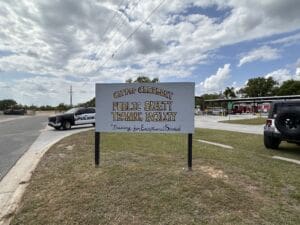
Currently, about six acres of the property have been developed, with significant groundwork already completed, including roughly 26,000 cubic yards of dirt brought in to prepare the site for construction and future expansion.
City Manager Rick Van Wagner says the state-of-the-art facility has been decades in the making.
“This has been a vision for the city of Clermont for over 20 years,” he says.
Van Wagner emphasized that the investment reflects a broader commitment to public safety as the city continues to grow.
“Public safety remains a top priority for the city of Clermont,” he says. “This facility is an example that we’re not just talking; that we’re actually trying to do something.”
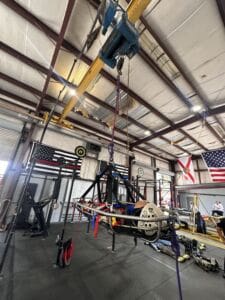
The fire training portion of the complex is already in full operation, giving Clermont Fire Department crews a dedicated space to train and sharpen skills for high-risk, real-world scenarios, from ladder operations and search and rescue to confined space and hazardous materials response. The department maintains an ISO Class 1 rating.
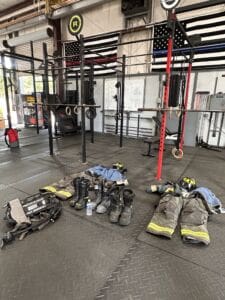
“Our fire department, they’re dedicated to preserving our ISO 1 rating, which is the highest possible classification for fire protection,” Van Wagner says. “We’re proud that they and we as a city have this classification.”
For firefighters, the new facility also eliminates the need to travel outside the area for required training hours.
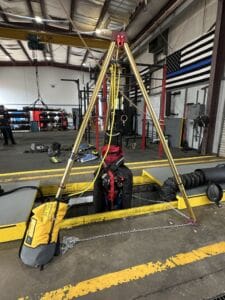
“For us to be able to do all this in house is a game changer,” one firefighter says during a tour.
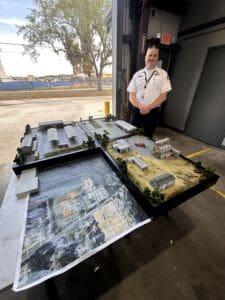
That shift is made possible in part by Assistant Chief of Administration Rick Casler, who helped bring the vision to life through detailed, small-scale models, a skillset he developed through building intricate, wartime-style models.
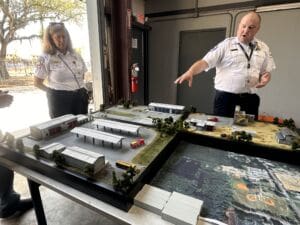
The models served as simulations of what the property could become, allowing staff to visualize layouts, test ideas and plan future phases before construction began.
“A lot of people, when they see it visually, it’s easier to picture the concept or what you’re trying to explain,” he says. “I was able to do it with a few dollars of materials and a weekend of time to be able to bring something and say, ‘This is exactly what we want to do.’”
Inside the facility, new technology is already reshaping how first responders train and how they save lives.
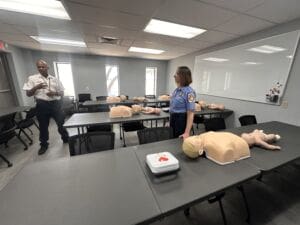
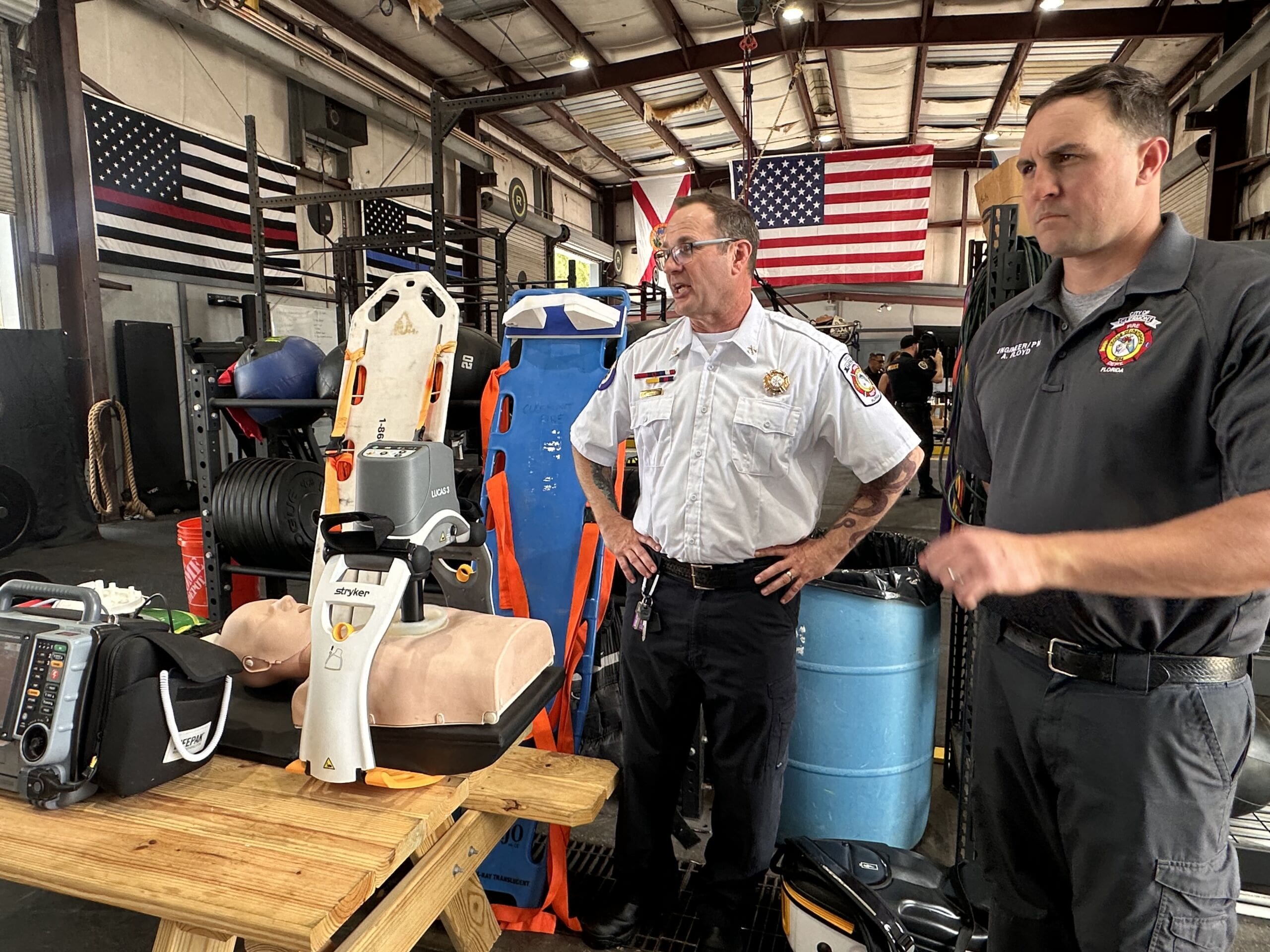
One of the most impactful additions is the LUCAS 3 device, a mechanical CPR system that delivers consistent, uninterrupted compressions during cardiac emergencies. The units, which cost between $10,000 and $12,000, are designed to maintain proper depth and rhythm without fatigue.
“If we were to walk in on a call, the firefighter would immediately check for a pulse and start CPR,” an assistant fire chief explains. “As we’re starting CPR, my partner can go ahead and set this up… and now, I am hands free.”
The difference, he says, comes down to consistency, time and success rates.
“Humans, we get tired,” he says. “The fact is, this never gets tired… we never have to stop.”
And in emergency medicine, even the smallest gains matter.
“Anytime we can cut down mere seconds we’re increasing survivability two-fold.”
Division Chief of EMS Dean Luginbuhl says those advancements are critical across a range of emergencies, including cardiac arrest, sepsis, trauma and severe bleeding incidents.
Additional equipment, including advanced intubation tools, is also helping responders perform complex airway procedures more quickly and accurately in the field.
Training at the facility extends well beyond medical response. The site includes dedicated space for water and ground rescue scenarios, with dummies and specialized equipment used to simulate real-life extractions.
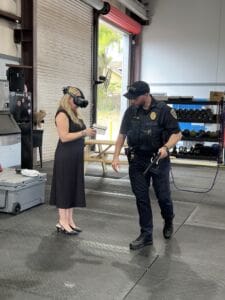
On the law enforcement side, the facility also houses expanded training operations for the Clermont Police Department, including updated shooting simulators that have been relocated to the site and upgraded with virtual reality headsets, replacing traditional video-based systems with more immersive, scenario-driven training.
“The City of Clermont is incredibly proud of our new public safety training facility,” Clermont Police Chief John Graczyk says.
Technology is also playing a major role in policing strategy, particularly through the use of drones.
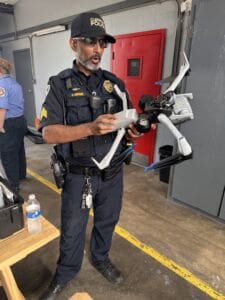
The department utilizes both indoor and outdoor drones, each valued between $20,000 and $25,000 and equipped with infrared capabilities and real-time video streaming. The technology allows command staff and officers to see exactly what the drone sees as situations unfold, providing critical information, like locations and perpetrator details, in real time.
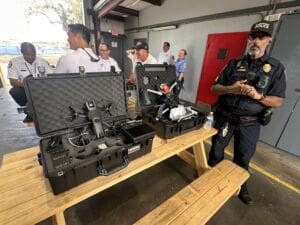
The drones can locate suspects, track movement, provide live direction to officers and even enter confined spaces. The indoor drone is capable of navigating tight environments, breaking glass if necessary and communicating with individuals through live or prerecorded messages.
“I’d rather this thing take all the bullets and get shot out of the air than one of my guys, right?” a police sergeant says. “I can’t replace a life but I can replace this, no problem.”
The facility also includes a fitness gym for first responders and classroom space where training courses can be held not only for police and fire personnel, but also for community members, part of a broader effort to improve public preparedness.
As Clermont continues expanding, Van Wagner says the city is also planning ahead, including a new fire station in the Wellness Way area to improve response times.
“This is gonna ensure faster response times,” he says.
As the complex continues to expand, city leaders say it will serve as both a training ground and a regional asset, ensuring Clermont’s first responders are prepared and ready when seconds matter most.
“When someone calls 911, which is often not a good call for somebody, it’s horrific at times, they need to have a team that’s professional, timely, compassionate and well equipped to be able to help the people that are on the other line that need their help,” Van Wagner says.

Originally from Nogales, Arizona, Roxanne worked in the customer service industry while practicing freelance writing for years. She came on board with Akers Media in July 2020 as a full-time staff writer for Lake & Sumter Style Magazine and was promoted to Managing Editor in October 2023—her dream job come true. Prior to that and after just having moved to Florida in 1999, Roxanne had re-directed her prior career path to focus more on journalism and went on to become a reporter for The Daily Commercial/South Lake Press newspapers for 16 years. Additionally, Roxanne—now an award-winning journalist recognized by the Florida Press Club and the Florida chapter of The Society of Professional Journalism—continues working toward her secondary goal of becoming a published author of children’s books.