

August 31, 2026
New Floaters or Flashes Can Be Warning Signs That Deserve Prompt Attention

By Akers Editorial
New Floaters or Flashes Can Be Warning Signs That Deserve Prompt Attention








Retina Care Expert
Nisarg P. Joshi, MD
Meet the Expert: Nisarg P. Joshi, MD, a board-certified, fellowship-trained vitreoretinal specialist who joined Florida Retina Institute in September 2023. His research has focused heavily on surgical and medical retina. He conducts clinical trials and routinely treats patients for various eye conditions, including dry age-related macular degeneration and uveitis.
Many people develop “floaters” and “flashes” as they age, so is there any reason I should see an ophthalmologist about them?
A: Floaters are incredibly common and as we age, a gradual increase in floaters is normal. Most people develop them as the vitreous gel inside the eye naturally shrinks and separates from the retina with age. Floaters can manifest in a variety of shapes. People have described them as dots, bugs, worms, cobwebs, clouds, and other images.
Flashes can resemble shimmering, flashing or streaks of light in your field of vision.
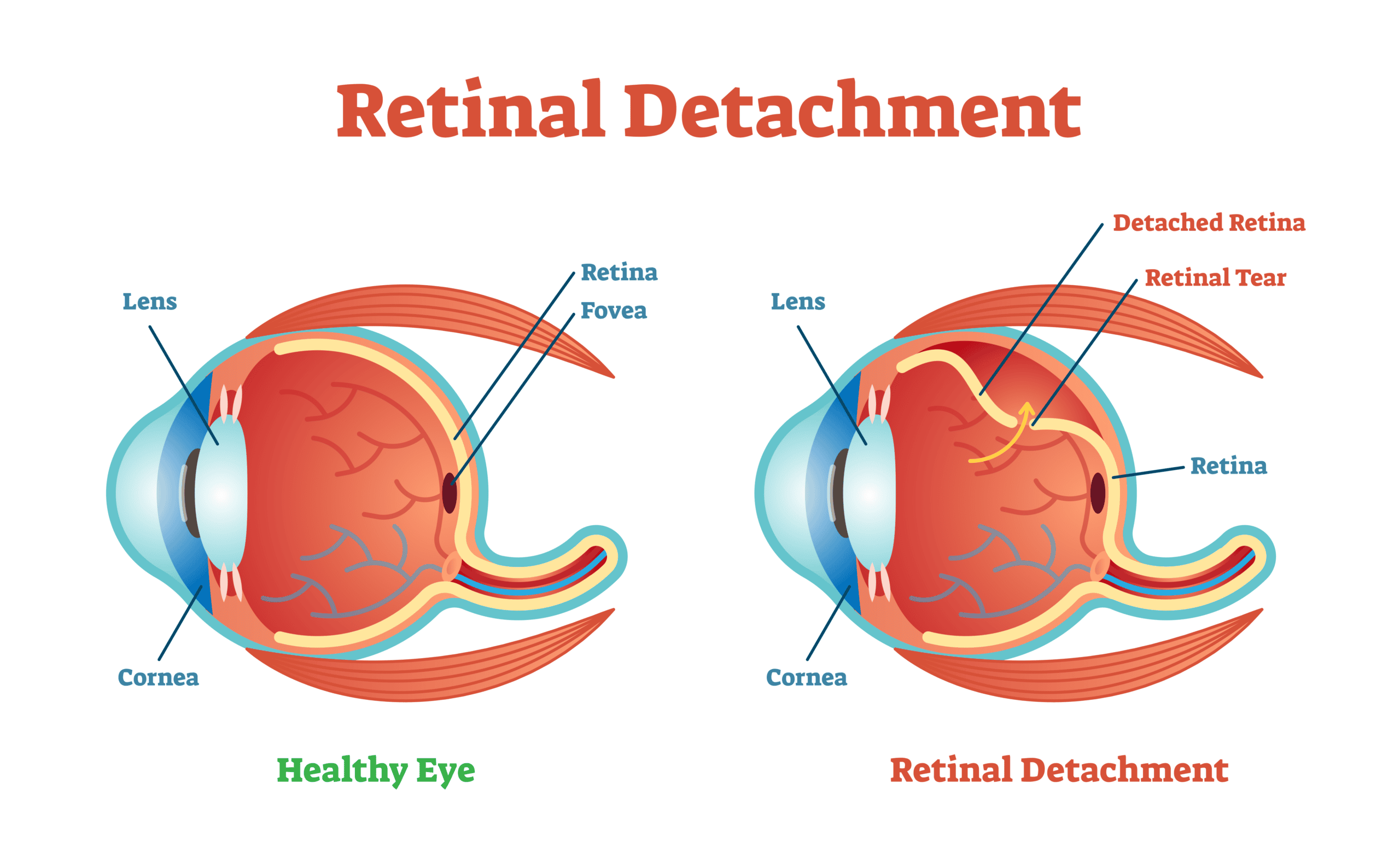
As the vitreous pulls away, it can occasionally tug hard enough to tear the retina, and a tear can silently progress to a detachment if it’s missed. My advice for every patient is that any new onset of floaters or flashes deserves a dilated eye exam within a few days. It’s the best way to rule out a retinal tear and detachment.
What are symptoms of retinal detachment syndrome and why does this serious condition need prompt medical attention to avoid permanent vision loss?
A: A retinal detachment is a true emergency, so don’t delay seeking medical help if you experience any of these symptoms:
- Sudden increase in floaters
- Floaters that resemble a shower of floaters or new large cobweb
- Flashes of light, especially off to the side
- Flashes that resemble c-shaped streaks or lighting strikes
- Dark curtain or shadow covers part of your vision
Once the retina detaches, it loses its nutrient supply and can develop permanent damage. Early on, the detachment is often still peripheral with the center part of your vision intact. This is the best time to catch and treat the detachment to preserve excellent vision. The longer the retina stays detached, the more damage can accrue. So, as with most health issues, the sooner you treat it, the better it is. That’s the reason we treat these symptoms with urgency. The goal is always to protect and preserve your vision.


Florida Retina Institute
4072 E FL-44, Freedom Plaza, Wildwood | 352.612.9006 | floridaretinainstitute.com