

August 31, 2026
Healthy Smiles Start with Regular Exams, Cleanings and Preventive Care

By Akers Editorial
Healthy Smiles Start with Regular Exams, Cleanings and Preventive Care








Dental Expert
Keyur Patel, DDS
Meet the Expert: Dr. Patel is a proud graduate of the University of Florida College of Dentistry, completing his studies in May 2020. He currently resides in Central Florida with his wife and two children. Passionate about improving lives, Dr. Patel is actively involved in humanitarian efforts to enhance his community. Outside of work, he enjoys spending quality time with his family and exploring the high seas.
How many dental visits do I need each year?
A: For most people, two visits a year — every six months — cover routine hygiene cleanings and exams. This twice-yearly rhythm lets your dental team catch small problems before they become expensive ones and keeps plaque and tartar from building up. Some patients with gum concerns or other risk factors need to come in three or four times a year. Your dentist will tell you if your situation calls for a more frequent schedule.
Why are X-rays so important, and can I have an exam or cleaning without them?
A: X-rays reveal what the eye can’t: cavities between teeth, bone loss, root infections, cysts, and impacted teeth all hide below the surface. By the time a problem is visible, it’s usually more advanced. X-rays catch it early, when treatment is simpler, more comfortable, and more affordable.
Think of it this way: just as lab work is essential to primary care, X-rays are our “labs” in dentistry; they let us see beyond the surface. They let us see beyond the surface. Without them, we’re only seeing part of the picture, and could easily miss something developing underneath. That’s why a truly thorough exam relies on them.
Is it dangerous to have dental X-rays taken?
A: This is one of the most common worries we hear, and the reassuring answer is no. Dental X-rays use an extremely low dose of radiation; far less than you’re exposed to naturally from the environment in everyday life. Modern digital X-rays have cut that exposure even further. Your team also takes protective steps, and X-rays are only taken when they’re needed to protect your health. The information they provide far outweighs the minimal exposure.
If I get regular cleanings, why am I told I need an SRP?
A: It’s a fair question. A regular cleaning (called a prophylaxis) maintains healthy gums by removing plaque and tartar at and just above the gumline. An SRP is a different, more involved treatment for when disease has already taken hold beneath the gums. If bacteria and tartar have worked their way into deeper pockets around your teeth, a standard cleaning can’t reach them. An SRP does. It’s not a sign you’ve neglected your teeth; gum disease can develop for many reasons, including genetics, and sometimes a deeper cleaning is simply what the situation requires.

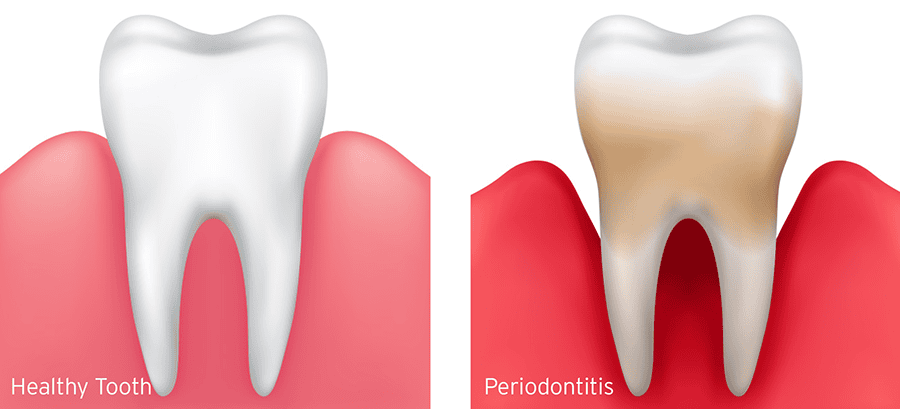
What exactly is periodontal disease?
A: Periodontal disease is an infection of the gums and the bone that support your teeth. It starts as gingivitis — red, swollen, or bleeding gums — and if left unchecked, it can advance to periodontitis, where the supporting bone begins to break down. Left untreated, it’s actually the leading cause of tooth loss in adults. The good news is that it’s highly manageable when caught early, which is another reason those regular visits matter so much.
What’s the difference between a prophylaxis cleaning and a periodontal cleaning?
A: A prophylaxis is a preventive cleaning for healthy mouths; it keeps good gums healthy. A periodontal cleaning (that maintenance schedule mentioned earlier) is for patients who have been treated for gum disease and need ongoing, more thorough care to keep it from returning. The difference comes down to your gum health: one prevents disease, the other manages it.
What’s the difference between traditional dentures and implant dentures?
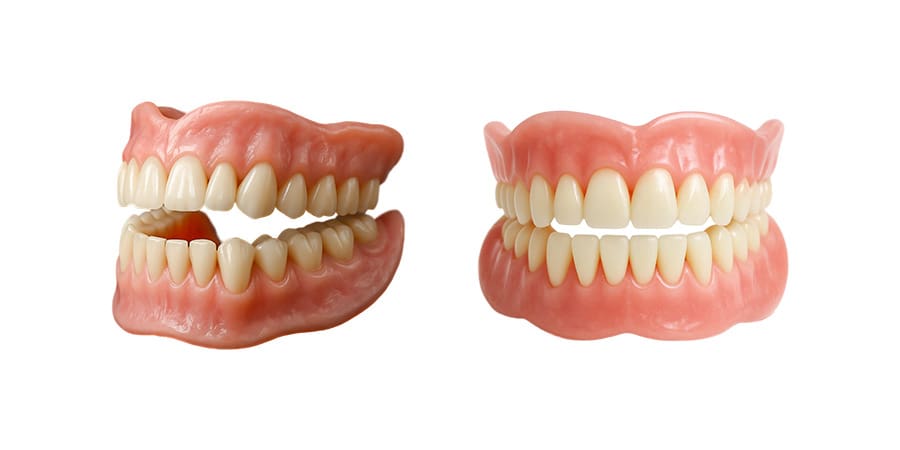
A: Traditional dentures rest on top of your gums and are usually held in place with suction or adhesive. They’re removable and a time-tested solution. Implant dentures, by contrast, anchor to titanium posts placed in the jawbone. This gives them a secure, stable fit that doesn’t slip, allows for stronger chewing, and helps preserve the jawbone over time, something traditional dentures can’t do.
How long do dentures last before they need replacing?
A: Traditional dentures generally last five to seven years. Over time, your mouth naturally changes shape and the dentures wear, so they’ll eventually need relining or replacing to keep fitting comfortably.

Elite Dental of Summerfield
17820 Southeast 109th Avenue, Summerfield | 352. 245.5400 | elitedentalfl.com