
August 31, 2026
Early, Specialized Care Can Make a Critical Difference When a Wound Isn’t Healing
By Akers Editorial
Early, Specialized Care Can Make a Critical Difference When a Wound Isn’t Healing








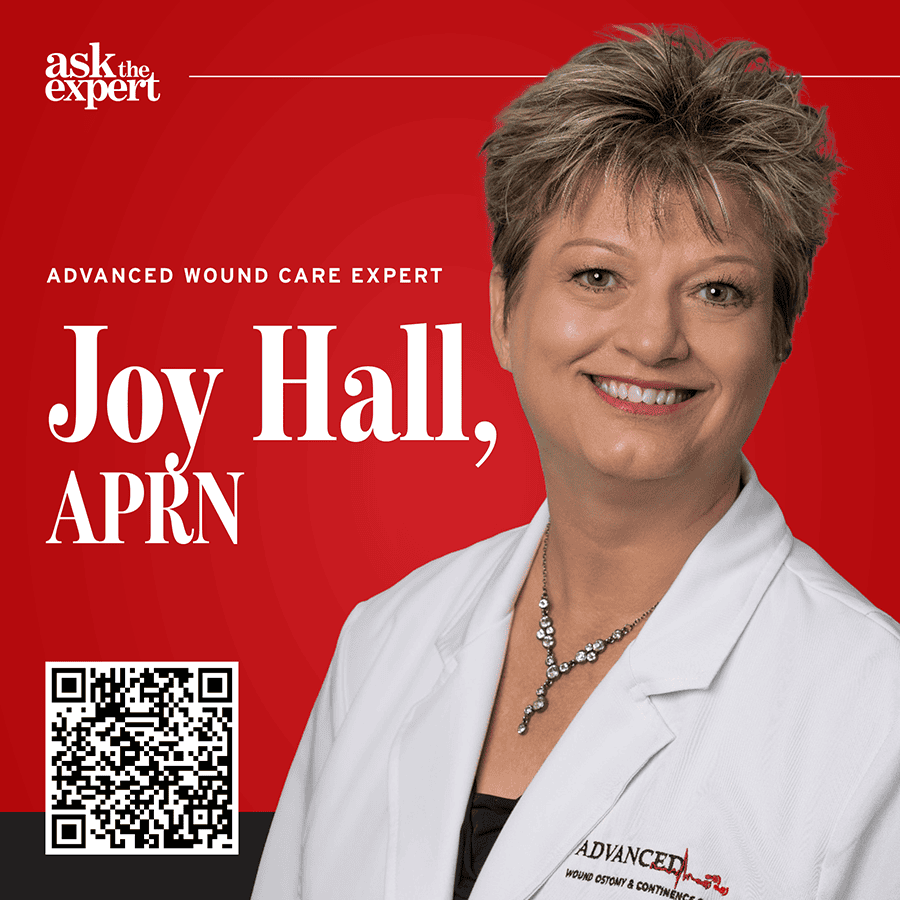
Advanced Wound Care Expert
Joy Hall, APRN
Meet the Expert: Joy Hall, an autonomous Advanced Practice Registered Nurse (APRN) with specialized expertise in wound care and lower extremity preservation. She is the owner of Advanced Wound Ostomy and Continence Care and brings extensive knowledge and experience in wound, ostomy, and foot care nursing, having previously held CWON and CFCN certifications. She is dedicated to providing evidence-based care for patients with chronic, complex, and non-healing wounds, ostomy and continence issues.

What types of injuries require advanced wound care?
A: Advanced wound care is necessary for wounds that aren’t healing as expected or are at risk of serious complications. This includes diabetic foot ulcers, pressure injuries (bedsores), venous and arterial leg ulcers, surgical wounds with delayed healing, burns, etc. One of the biggest misconceptions is that a wound will eventually heal on its own if it is simply covered. If a wound has not shown significant improvement within two to four weeks, it should be evaluated by a wound care specialist. Early intervention is critical because prompt, specialized treatment can prevent infection, hospitalization, and even amputation.
Warning signs include:
- Increasing Redness
- Swelling
- Warmth
- Drainage
- Foul Odor
- Worsening Pain
- Fever
- Black or discolored tissue
- Wound continues to enlarge rather than improve
What is an “ostomy” and how can specialized care help patients maintain quality of life?
A: An ostomy is a surgically created opening, called a stoma, that allows waste to leave the body when part of the digestive or urinary system is no longer functioning normally. Ostomies may be temporary or permanent and are often necessary because of conditions such as colorectal cancer, inflammatory bowel disease, trauma, or bladder disease. Adjusting to life with an ostomy can feel overwhelming, but with proper education and support, most people with an ostomy can travel, exercise, swim, work, and enjoy a full, active lifestyle.
What advancements in wound, ostomy, and continence care are making the biggest differences?
A: Today’s approach is far more evidence-based, individualized, and focused on treating the underlying cause of a wound rather than simply covering it. We now have advanced dressings that help regulate moisture, manage bacteria, and stimulate healing, as well as therapies such as negative pressure wound therapy, biologic skin substitutes, and improved compression systems for patients with venous disease. Better diagnostic tools allow us to identify circulation problems, pressure risks, and infection earlier. In ostomy care, improvements in pouching systems and skin barrier technology have significantly reduced leakage and skin irritation. Successful outcomes require treating the whole person. Nutrition, diabetes management, circulation, mobility, and patient education all play essential roles in wound healing and long-term health.
Advanced Wound Ostomy & Continence Care
9401 SW Hwy 200, Ste. 6003, Ocala | 352.897.0063 | myadvancedwound.com