
By Akers Editorial
Breast Cancer Care and Early Detection at UF Health








According to the National Breast Cancer Foundation, one in eight women in the United States – or about 12.5 percent of our country’s female population – will be diagnosed with breast cancer in her lifetime.
As of September 2026, there have been approximately 275,000 breast cancer diagnoses in the country this year. An estimated 42,140 U.S. women will die from breast cancer by the end of 2026.
In Florida, the incidence is 133 cases per 100,000 women. Cases in Lake, Sumter and Marion counties are higher than the national baseline, which can be explained by the older demographics in our area.
As startling as those numbers may be, there is good news.
When breast cancer is localized and caught early, the five-year survival rate is over 99 percent. Early diagnosis can also mean less rigorous treatment for the patient. As of today, there are more than four million breast cancer survivors in the U.S.
Local care
UF Health has a team dedicated entirely to breast cancer care and provides comprehensive care, start to finish, at their Breast Center located in The Villages inside of UF Health’s Spanish Plaines Hospital.
In practical terms, this means Central Florida women facing breast cancer have access to the best care — and close to home.
The multi-disciplinary team at UF Health Breast Center includes clinicians, geneticists, pathologists, breast surgeons, plastic and reconstructive surgeons, medical oncologists and radiation oncologists, in addition to skilled nursing and support staff.
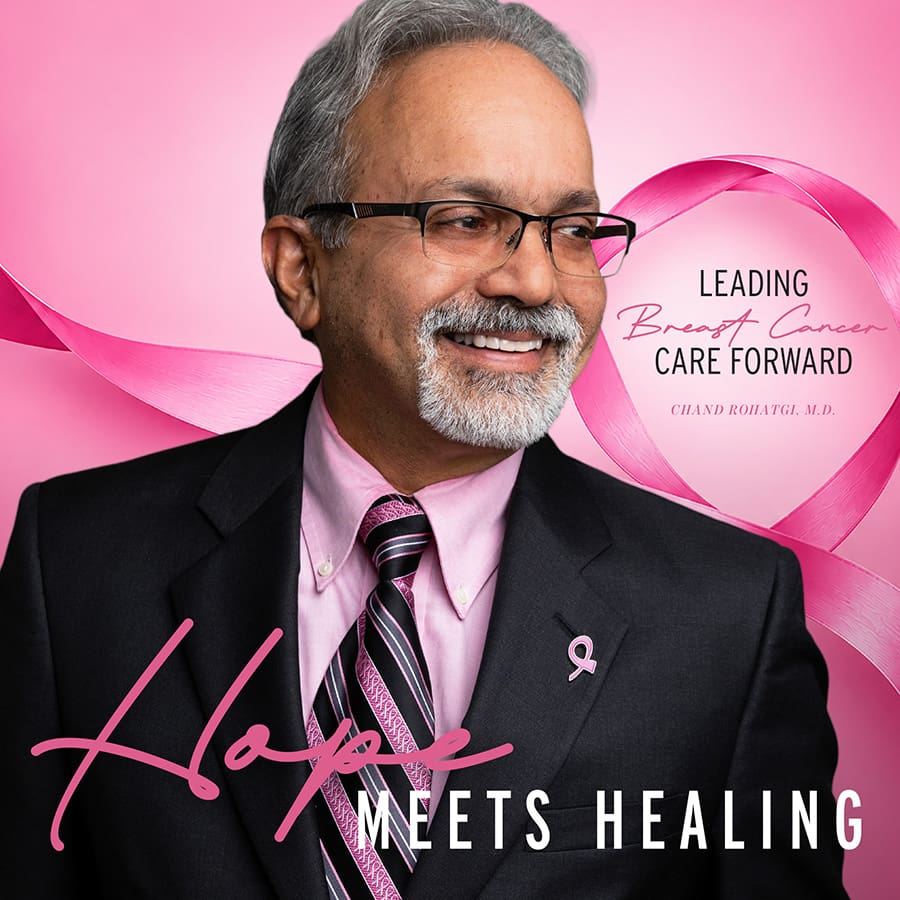
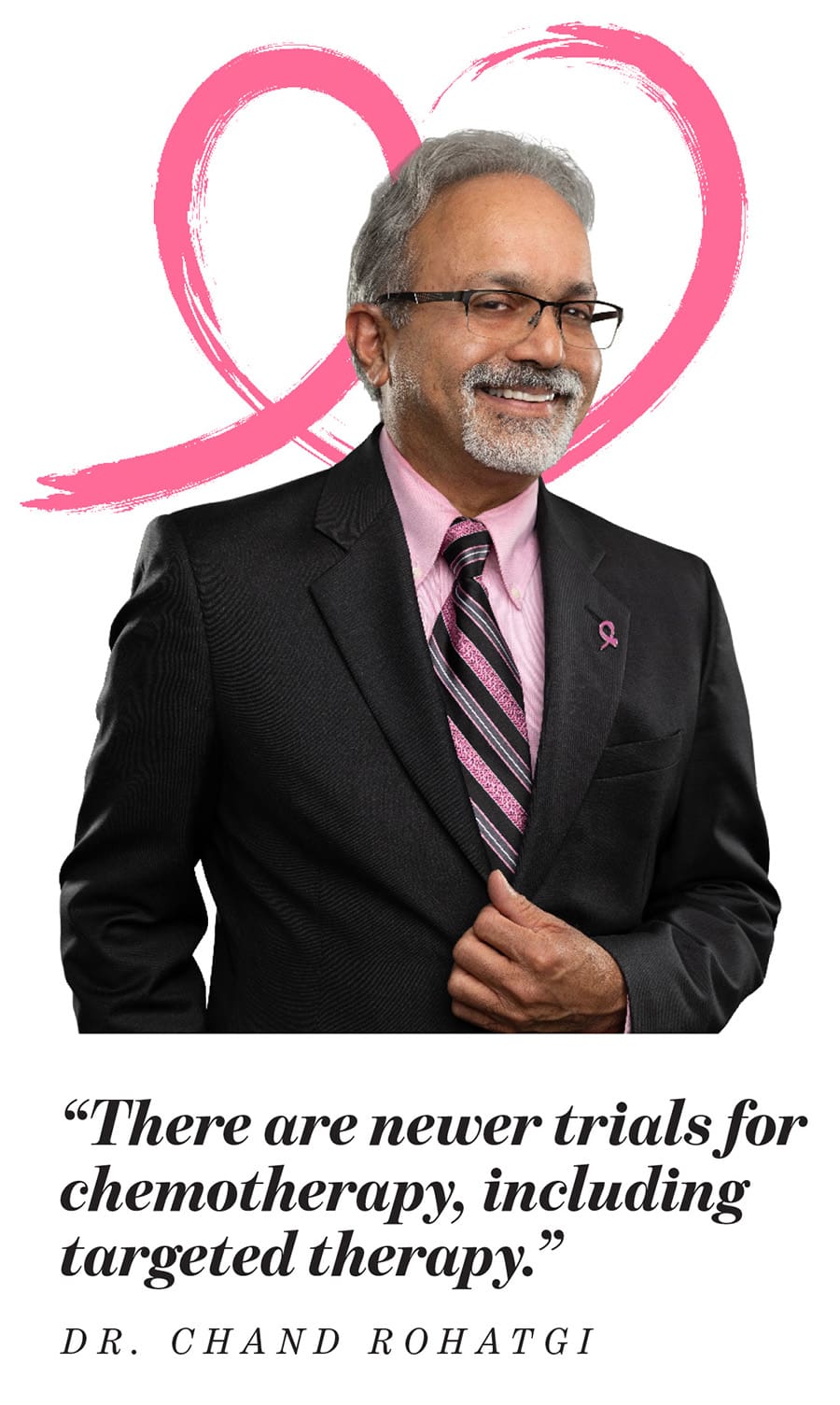
The team is led by Chand Rohatgi, M.D., a board-certified surgeon, who specializes in management of cancerous and non-cancerous conditions of the breast.
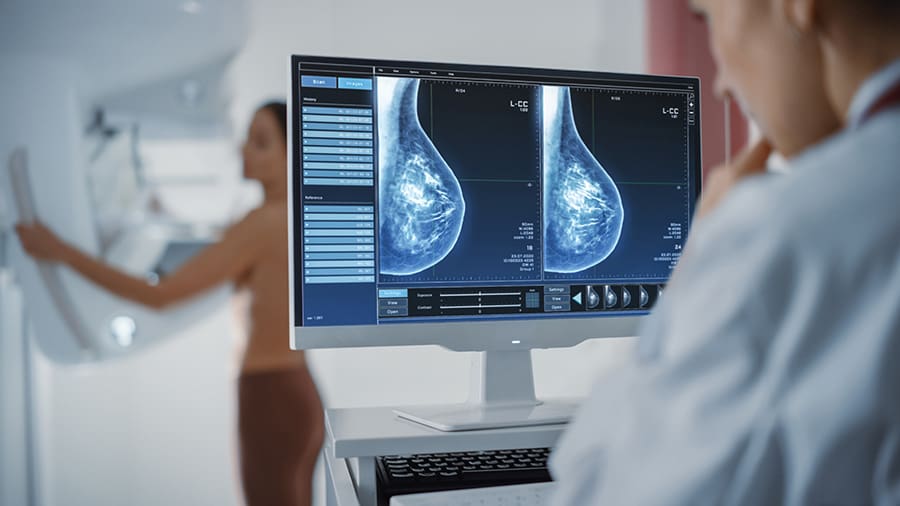
“The detection rates among those having mammograms have improved as we embrace digital technology and AI,” says Dr. Rohatgi. “Once breast cancer is diagnosed, we have better treatment protocols today and protocols are improving yearly.”
From the beginning, the goal at UF Health has been to streamline the care and treatment of women diagnosed with breast cancer, and to help protect women at high risk of developing breast cancer.
“UF Health has a dedicated team of professionals who deal only with breast diseases and cancer; hence their expertise is far superior in terms of detection, treatment protocols in surgery, medical and radiation oncology,” says Dr. Rohatgi. “The support services needed by patients after their treatments are widely available. This translates to better care with less morbidity to the patient.”
Personalized care plans
Breast cancer may affect many women, but each woman is an individual and treatment can differ significantly depending on each case. This is where the team approach at UF Health Breast Center comes into play.
It’s not just about compassionate care; it’s about personalized treatment.
Patients routinely say that their doctors at UF Health make them feel like an individual, not just another number. That is high praise to the Breast Center team as this is always their goal.
“The whole team of professionals meets and discusses the patients at a single platform and decides the best pathway forward for each patient depending on each individual’s disease and risk,” says Dr. Rohatgi. “This again translates to better care.”
When surgery is necessary, it is always designed to provide the most positive outcome for the patient.
“At this time in breast cancer surgery, we are at a point nationally when we are attempting to do less with better results, and at UF Health, we have embraced it,” says Dr. Rohatgi. “This means less morbidity for the patient without compromising the results.”
Among the newer technology and techniques used by UF Health surgeons are wireless driven lumpectomies which may allow the scar to be hidden.
Dr. Rohatgi explains that if full lymph node removal is needed, anastomotic surgery is available to counter the long-term effects.
Newer reconstruction methods are available for cosmetic purposes. Radiation is being tailored for each patient based on their specific case.
Treatment options
For most patients with a breast cancer diagnosis, their journey begins when mammogram results come back abnormal.
This is when the team approach of the experts at UF Health Breast Center goes into action.
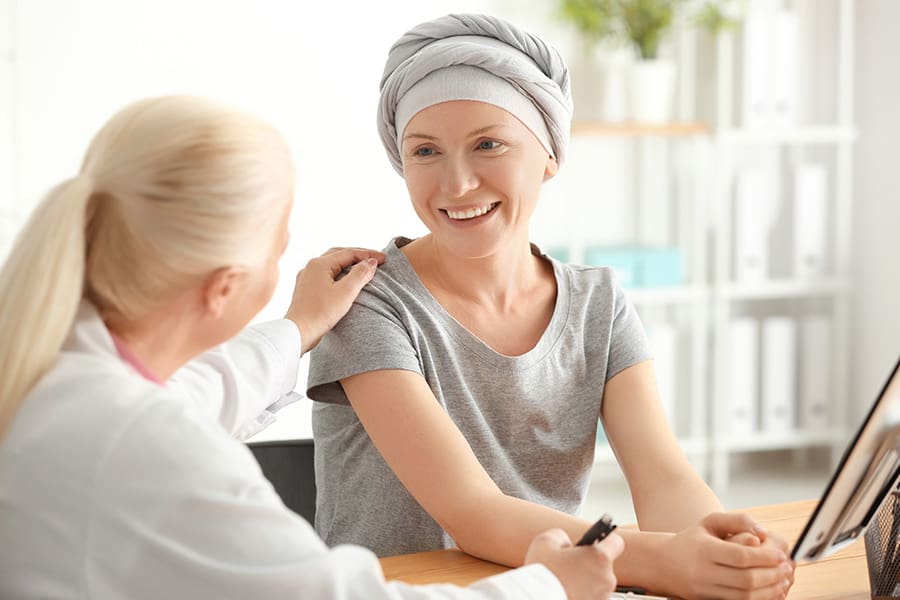
All UF Health breast cancer patients are given access to a nurse navigator to guide them through the process. Nurse navigators provide case management services, but their duties extend beyond the practical. These committed professionals also offer clinical and emotional support as long as the patient is undergoing treatment.
Some patients require surgery combined with targeted therapy with radiation to eliminate cancer cells. Other patients may only require surgery. Still other patients may need different treatment, such as chemotherapy.
Also offered are clinical studies involving the latest in targeted therapeutic medicines.
“There are newer trials for chemotherapy, including targeted therapy,” says Dr. Rohatgi. “Immunotherapy and other treatments are also available.”
“We have the technology at our disposal to detect lymphedema (swollen arms) at a much earlier stage where measures can be taken to stop its progression,” he says.
Be proactive
Beginning in their 20s, all women should conduct regular breast self-exams.
The American Cancer Society recommends women start annual screening for breast cancer at age 40, or possibly earlier, if your family has a history of breast cancer.
It’s important to know your family history because having a mother, sister or daughter with breast cancer means you are almost twice as likely to develop this type of cancer yourself.
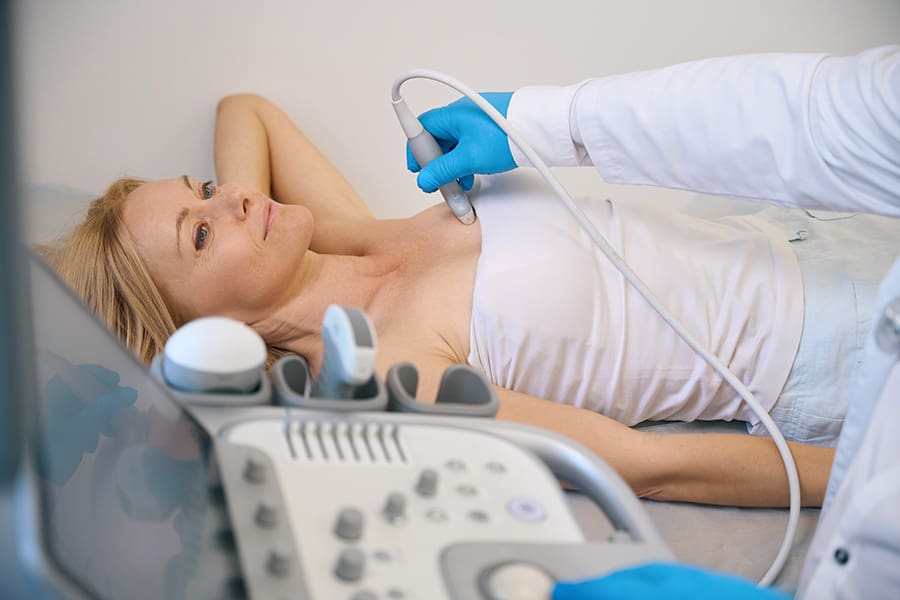
“The best way to find breast cancer today is still the screening mammogram but even the women who get yearly screening may find a lump in between two mammograms,” says Dr. Rohatgi. “If you have dense breasts, have family history or genetic mutations, or have had a high-risk biopsy, you should ask your provider for more options, including ultrasound, MRI or contrast mammography.”
Just over 65 percent of breast cancer cases are diagnosed at the localized stage, meaning before it has spread beyond the breast.
Even when you are doing routine scans, be aware of your body and let your doctor know if you notice any unusual signs or changes.
“A lump, nipple discharge, dimpling of skin should raise an alarm,” says Dr. Rohatgi.
Be proactive
Beginning in their 20s, all women should conduct regular breast self-exams.
The American Cancer Society recommends women start annual screening for breast cancer at age 40, or possibly earlier, if your family has a history of breast cancer.
It’s important to know your family history because having a mother, sister or daughter with breast cancer means you are almost twice as likely to develop this type of cancer yourself.
“The best way to find breast cancer today is still the screening mammogram but even the women who get yearly screening may find a lump in between two mammograms,” says Dr. Rohatgi. “If you have dense breasts, have family history or genetic mutations, or have had a high-risk biopsy, you should ask your provider for more options, including ultrasound, MRI or contrast mammography.”
Just over 65 percent of breast cancer cases are diagnosed at the localized stage, meaning before it has spread beyond the breast.
Even when you are doing routine scans, be aware of your body and let your doctor know if you notice any unusual signs or changes.
“A lump, nipple discharge, dimpling of skin should raise an alarm,” says Dr. Rohatgi.
In addition to breast self-exams and annual screenings, regular exercise and a healthy diet should be part of every woman’s daily routine.
“Survival rates continue to improve, and the rate of mammography surveillance has improved slightly but not all women are getting mammograms yearly,” says Dr. Rohatgi, adding that, “cancer is on the uptick in the younger population.”
In fact, about 10 percent of the new cases of breast cancer in this country are diagnosed in women under age 45. When women younger than age 35 have an original diagnosis of breast cancer, they have a higher risk of recurrence.
Education and assistance
Knowledge is power and UF Health is committed to providing education and support options for breast cancer patients and their families.
“Survivorship meetings are held regularly with a navigator available at all times to all our patients,” says Dr. Rohatgi.
Take charge of your health.
If you have concerns following a recent screening, find unusual symptoms during breast self-exam, or simply want to schedule your annual screening, reach out to UF Health Breast Center today.
Paid Promotional Feature
Photo of Dr. Chand Rohatgi by Nicole Hamel