
November 17, 2026
Big Ridge Outdoor Kitchens Combines Custom Design With Innovative Engineering
By Akers Editorial
Big Ridge Outdoor Kitchens Combines Custom Design With Innovative Engineering





From custom designs to innovative ventilation and easy assembly, Big Ridge is changing how homeowners approach outdoor kitchens.
An outdoor kitchen may look simple once it’s finished, but creating one involves far more than choosing a grill and countertop. Heat, ventilation, weather exposure, structural support and the way a homeowner plans to use the space all play a role.
At Big Ridge Outdoor Kitchens, those considerations are part of a process that combines personalized design, in-house engineering and detailed craftsmanship to create kitchens tailored to each homeowner.
It’s an approach that has taken years to develop, according to residential sales manager Jodi Smith and research and development supervisor Evan Thompson, who work together to turn customers’ ideas into finished kitchens.
The company began when Jodi’s brother-in-law, Garrad, wanted an outdoor kitchen but couldn’t find one that matched his vision. Hiring a contractor proved expensive, so he decided to build it himself.
That experience helped inspire a manufacturing system intended to offer the customization of a site-built kitchen without the same level of expense or on-site construction.
“I can confidently tell most homeowners, if you can dream it, we can build it,” Jodi says.
Designed From the Inside Out
Rather than asking customers to select from a handful of predetermined layouts, Jodi begins each project with a detailed consultation.
She considers everything from the available space and surrounding structures to how many people will use the kitchen and which appliances make sense for their needs.
A kitchen designed for a couple may function differently from one intended for entertaining large groups. Jodi helps customers plan cooking, preparation and serving areas so the space works as well as it looks.
Outdoor kitchens also present challenges that indoor kitchens generally don’t face, including extreme heat, outdoor gas appliances and exposure to rain, humidity and salt air.
“We have to engineer and design from the beginning to accommodate for safety as well as aesthetics as well as style in use,” Jodi says.
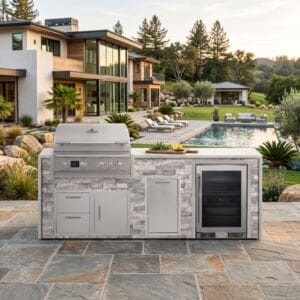
Big Ridge uses triple-galvanized steel framing and outdoor-rated finishes, including natural stone, wood veneer UPVC material and granite. For coastal environments, the team can recommend appliances made with marine-grade stainless steel.
While Jodi approaches each project from the homeowner’s perspective, Evan develops the internal framework needed to make the design possible.
“I guess that’s our biggest difference. I create from the outside in, Evan creates from the inside out,” Jodi says. “And as long as I am designing for his needs, it never comes into play with the customer because all of our outdoor kitchens are completely fabricated.”
That collaboration allows Big Ridge to accommodate unusual layouts, appliance requirements and obstacles such as utility connections extending from walls.
Rather than simply assembling standard cabinets, the company fabricates its kitchens to order, incorporating structural and safety requirements into the design before production begins.
An Innovation You Might Never Notice
One of the company’s most distinctive engineering developments is also among its least visible: the ventilation system.
Outdoor kitchen islands need proper airflow, particularly when housing gas appliances. Traditionally, that has meant installing large stainless-steel vents into the sides of the structure.
Although functional, those vents can interrupt the appearance of an otherwise carefully designed kitchen.
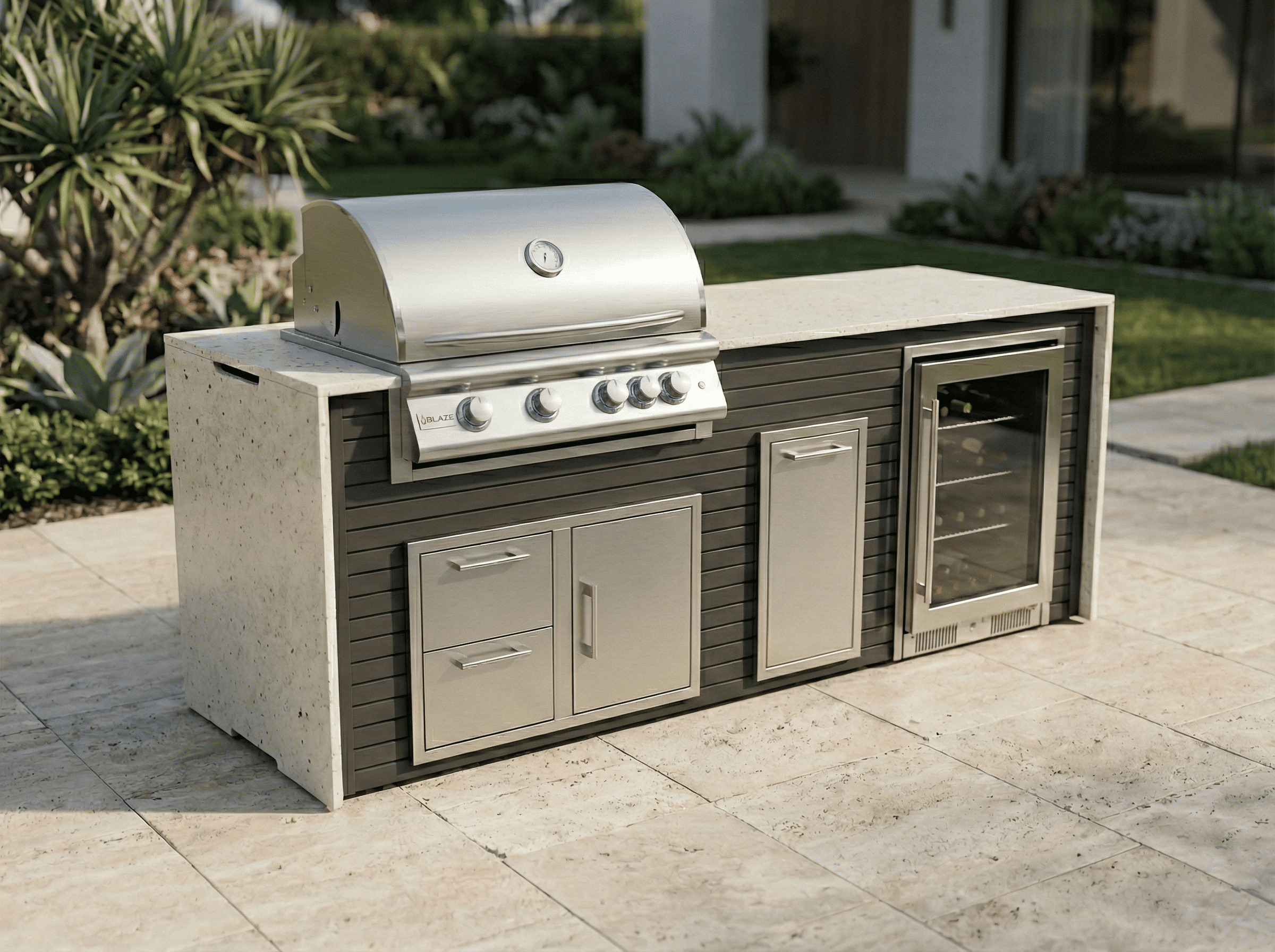
Big Ridge developed a system that integrates ventilation into its exterior finishes, including stone, granite and artisan plank, allowing the openings to blend into the design.
“We came up with a different process that integrates it into all of our side material, whether that be the artisan plank, the stone or our granite sides,” Evan says.
The approach maintains the necessary ventilation while giving the kitchen a cleaner appearance. It also allows the team more flexibility when designing smaller islands where traditional vent placement might limit the layout.
Jodi says the innovation has made it possible to fit ventilation into kitchen designs that previously would have been difficult to accommodate.
It’s an example of how the company uses engineering to address both safety and aesthetics without requiring homeowners to compromise their vision.
Built to Fit, Designed to Assemble
Another major distinction is how Big Ridge kitchens are manufactured and delivered.
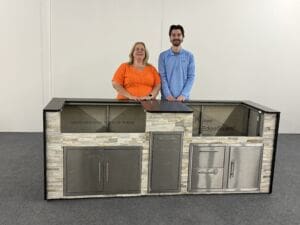
Instead of shipping a large, fully assembled island that may require heavy equipment to move into place, the company designs its kitchens to be separated into individual panels.
Those panels can be carried through gates, around obstacles or even through a house to reach a backyard.
Jodi says most weigh about 60 pounds, allowing two people to handle them. Each section is labeled, and the necessary assembly hardware is included.
Homeowners can assemble the kitchen themselves, hire a contractor or use Big Ridge’s assembly service.
Even the countertops are engineered with installation in mind. The company’s real granite countertops attach to a supporting frame rather than being permanently glued down, allowing them to be removed if the kitchen needs to be disassembled or relocated.
The stone finishes receive similar attention. Mitered edges and staggered stone placement help conceal the joints between panels, giving the assembled kitchen the appearance of a continuous, site-built structure.
The system addresses a common obstacle with outdoor kitchens: getting a large, heavy finished product into a backyard without extensive equipment or construction.
Craftsmanship Behind Every Kitchen
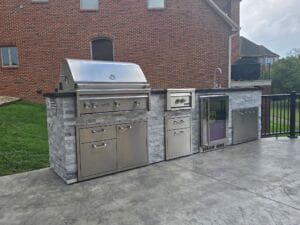
Although Big Ridge offers standard designs, each kitchen is manufactured and inspected individually.
Every order is accompanied by a quality-control checklist that follows it through steel cutting, welding, assembly, finishing and packaging.
Employees check appliance openings, overall dimensions, ventilation, electrical options and finish selections. About 20 signatures may appear on a completed checklist, representing the team members responsible for different stages of production.
For custom kitchens, the process begins with a drawing approved and electronically signed by the customer.
“My design detail is our signed drawing, so we can make 500 changes in the design stage,” Jodi says. “When the customer places the order, there is one drawing that they e-sign, and that is the drawing that follows them from me all the way through engineering and production.”
The drawing becomes the reference for everyone involved, helping ensure the finished kitchen matches what the customer approved.
Evan says craftsmanship also comes down to employees taking responsibility for their work. During inspections, he encourages the team to consider whether they would be satisfied having the finished kitchen in their own backyard.
That attention extends to the company’s packaging, which has been refined to reduce shipping damage, and to product improvements based on feedback from customers and employees.
One example is a level-overhang seating option that adds about 12 inches of countertop space, giving homeowners more room for serving and seating without requiring a separate raised bar.
A Custom Experience Without the Complications
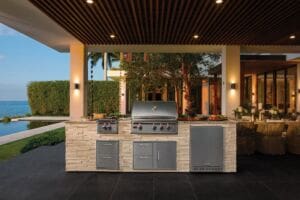
For Big Ridge, the goal is to make custom outdoor kitchens accessible to homeowners who may not have the budget, time or desire to manage a traditional construction project.
Jodi says some of the company’s larger custom kitchens can ship in about three to four weeks, while the panelized design gives customers flexibility in how they handle installation.
Some homeowners prefer to assemble their kitchens themselves. Others want the entire process handled for them.
Either way, the same design and engineering process guides the project from the first conversation to the finished backyard.
“From the design all the way through to the installation, it can be a unique experience without all of the on-site contractors and coordinating all of that,” Jodi says. “We can handle it from start to finish, so you can do as much or as little as you want.”
While homeowners may first notice the granite, stonework or appliances, much of what makes a Big Ridge kitchen distinctive is found in the engineering beneath those finishes.