


By Akers Editorial
Advanced Spine Care Helps Patients Reduce Pain, Restore Mobility








Spinal Surgery Expert
Ali Zarezadeh, MD
Meet the Expert: Ali Zarezadeh, MD, a highly skilled spine surgeon with extensive expertise in treating both common and complex spine conditions. Dr. Zarezadeh uses the latest technology and techniques and works with a skilled team of medical professionals at UF Health. The goal is always to restore function, improve quality of life and provide optimal patient outcomes.
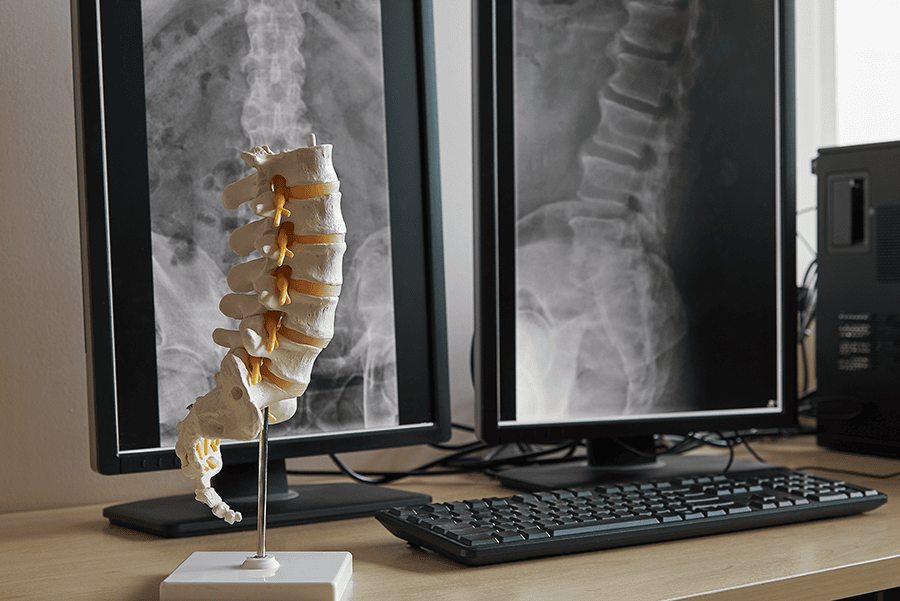
What kind of chronic and complex spine disorders do you treat at UF Health?
A: I treat a wide range of spine conditions affecting both the neck and lower back, from common problems like herniated discs, spinal stenosis and degenerative arthritis to more complex conditions, including:
- Scoliosis and spinal deformities
- Spinal injury and fractures
- Spinal stenosis
- Surgical and nonsurgical treatments
Many patients have been living with chronic pain or nerve symptoms for years before seeking care. My goal is to understand the source of their symptoms and develop an individualized treatment plan that helps them return to the activities they enjoy. While surgery is sometimes the best option, many patients improve with non-surgical treatments. Surgery is recommended only when it offers a meaningful benefit.
How does advanced technology play a role in surgical and non-surgical spine treatments?
A: Technology has transformed the way we care for spine patients. At UF Health Spine Center, we utilize advanced imaging, computer-assisted navigation, intraoperative CT scanning, and minimally invasive surgical techniques that allow us to perform complex procedures with greater precision. These technologies can improve implant accuracy, reduce tissue disruption, and often help patients recover more quickly. We also use motion-preserving procedures, when appropriate, to maintain normal spinal movement. Just as importantly, advanced MRI and CT imaging help us make more accurate diagnoses and guide treatment decisions, whether that treatment is surgical or non-surgical.
Is there anything people should do on a regular basis to maintain spine health?
A: The best way to maintain a healthy spine is to stay active. Regular exercise, maintaining a healthy weight, strengthening your core muscles, practicing good posture and avoiding tobacco use all play an important role in preventing back and neck problems. I also encourage patients to listen to their bodies. Persistent pain, numbness, weakness or balance problems should not be ignored. Seeking evaluation early can often prevent a condition from worsening and may allow us to treat it without surgery.

UF Health Spine Center
ufhealth.org/doctors/ali-zarezadeh
UF Health Medical Group Orthopaedics — Leesburg
701 Medical Plaza Drive, Leesburg
352.323.4000
UF Health Medical Group Orthopaedics — Spanish Springs
1501 US HWY 441
Building 1800, Suite 1832, The Villages
352.323.4000
UF Health Medical Group Orthopaedics — Tavares
2051 Mayo Drive, Tavares
352.323.4000