
By Roxanne Brown
Lake County Among First in Nation to Launch Rapid DNA Testing








DNA evidence that once could leave Lake County investigators waiting months for answers can now produce results in as little as 24 to 48 hours.
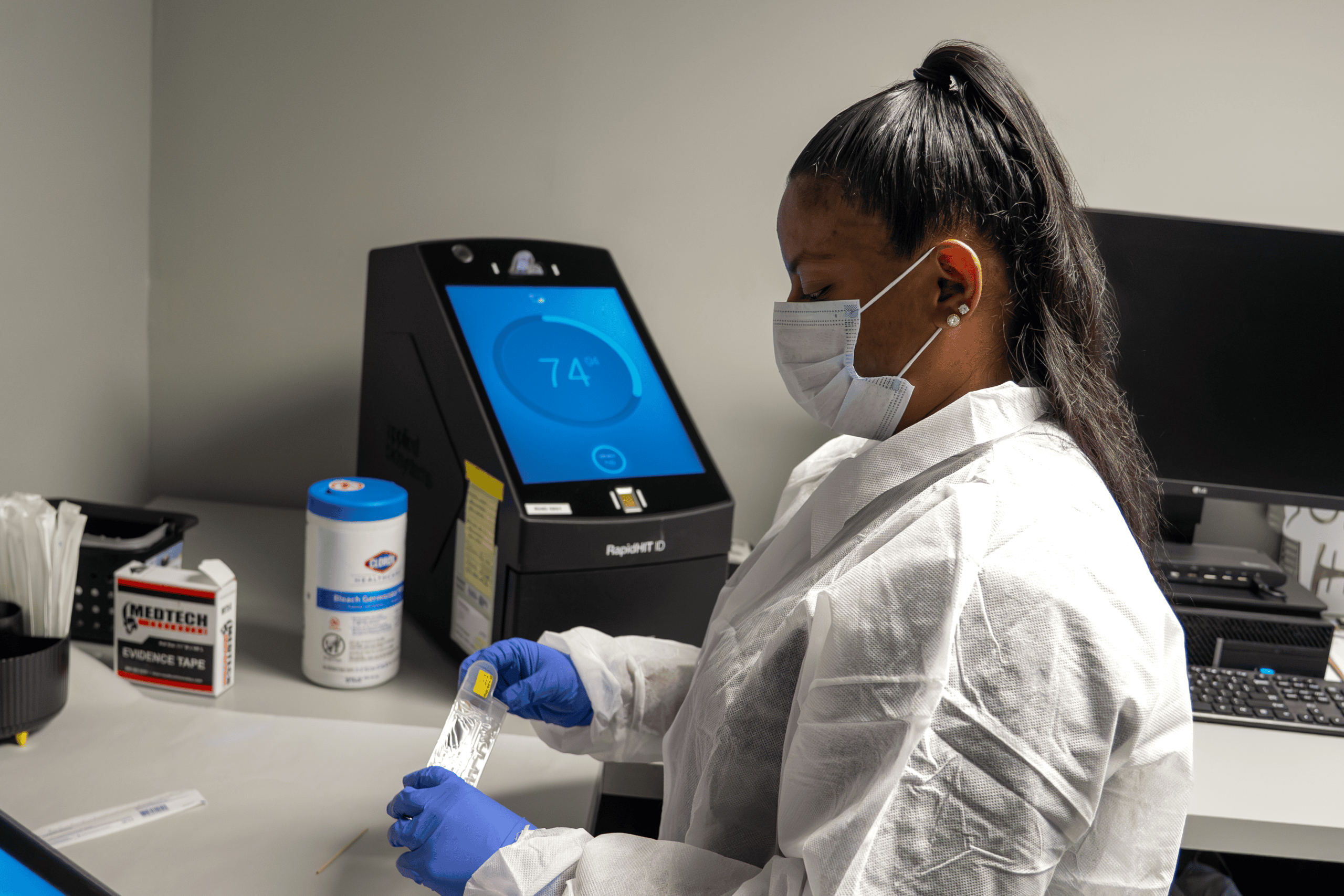
The Lake County Sheriff’s Office is one of two sheriff’s offices in the nation operating under Florida’s new Forensic Rapid DNA Program, a partnership with the Florida Department of Law Enforcement that allows specially trained local forensic specialists to process qualifying DNA evidence on-site and send the data to FDLE for analysis.
The Marion County Sheriff’s Office went through the process alongside LCSO, making the two agencies the first in the country to operate under the program.
And in Lake County, the faster turnaround is already affecting active investigations.
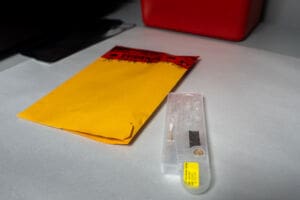
In a recent sexual assault case, detectives had been waiting several months for results from an evidence kit submitted through the traditional testing process when the victim identified a possible suspect.
Investigators obtained a DNA sample from that person and processed it through LCSO’s new Rapid DNA system.
Results came back the next day and excluded the person as the perpetrator.
In another case since the program went live, DNA processed locally resulted in a hit through the Combined DNA Index System, or CODIS, providing investigators with a potential suspect much sooner.
“Before, the turnaround time for casework was about six to 18 months waiting to get results, but now we’re able to do that within 24 to 48 hours as far as providing a faster turnaround time for our detectives,” LCSO Forensic Laboratory Specialist Marissa Evans says.
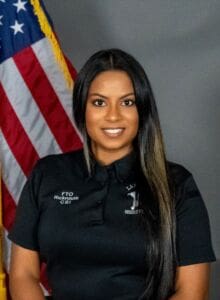
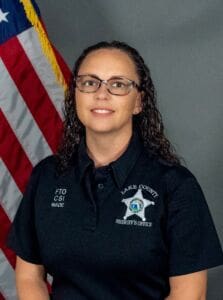
LCSO began working with FDLE in March 2025 after being selected as Florida’s pilot agency for the initiative. Forensic Laboratory Specialists Evans and Jessica Wade underwent specialized training while the agency developed policies and procedures and worked to meet the standards required to participate.
LCSO received final approval July 17 to operate as an FDLE partner agency.
Rapid DNA technology itself is not new, and Wade says law enforcement agencies elsewhere in the country already have access to Rapid DNA instruments. What distinguishes the Florida program is the partnership that allows locally processed DNA data to move through the state laboratory for analysis and, when eligible, comparison through CODIS.
“A lot of places around the country do have the Rapid DNA instruments,” Wade says. “But none of them have the ability to communicate with their state labs as of yet.”
Once LCSO processes qualifying evidence, the resulting data is sent to FDLE, where an analyst reviews the work. Eligible DNA profiles can then be searched through CODIS, which compares profiles at the local, state and national levels.
Before the partnership, LCSO could process certain samples in-house, but the results only served as a presumptive screening or investigative tool.
“Once it goes through FDLE and their analysts make either an identification or they get a CODIS hit, or they say yes, that sample belongs from this evidence sample, we’re able to use that as a confirmatory,” Wade says. “That’s because an actual analyst from FDLE reviews the work that we have done and provided for them.”
For investigators, that speed can help identify a potential offender sooner or, as the recent sexual assault investigation demonstrated, quickly rule someone out.
Evans says the program also reduces some of the workload sent to FDLE laboratories, which handle evidence from agencies throughout their service areas.
“We’re taking some of the workload off of FDLE so that way they’re not so overwhelmed with how much they have,” Evans says.
Rapid DNA will not replace traditional forensic DNA testing. Complex evidence and samples that do not qualify for the program will continue through the traditional laboratory process.
For Wade and Evans, both former crime scene investigators who have spent roughly 2½ years helping bring the project to fruition, the payoff is already visible.
“It’s a real good feeling to be able to know we’re seeing results from all the hard work the two of us have put into it,” Wade says. “The turnaround time for getting results is pretty impressive.”
Evans says seeing what those faster answers mean to investigators has been rewarding, too.
“Just seeing how happy investigators are about getting the results they need to close out their cases faster, is also great,” Evans says. “It’s rewarding to be able to assist them with that.”
























Originally from Nogales, Arizona, Roxanne worked in the customer service industry while practicing freelance writing for years. She came on board with Akers Media in July 2020 as a full-time staff writer for Lake & Sumter Style Magazine and was promoted to Managing Editor in October 2023—her dream job come true. Prior to that and after just having moved to Florida in 1999, Roxanne had re-directed her prior career path to focus more on journalism and went on to become a reporter for The Daily Commercial/South Lake Press newspapers for 16 years. Additionally, Roxanne—now an award-winning journalist recognized by the Florida Press Club and the Florida chapter of The Society of Professional Journalism—continues working toward her secondary goal of becoming a published author of children’s books.