

By Akers Editorial
Screening Before Symptoms Appear Can Help Detect Colorectal Cancer








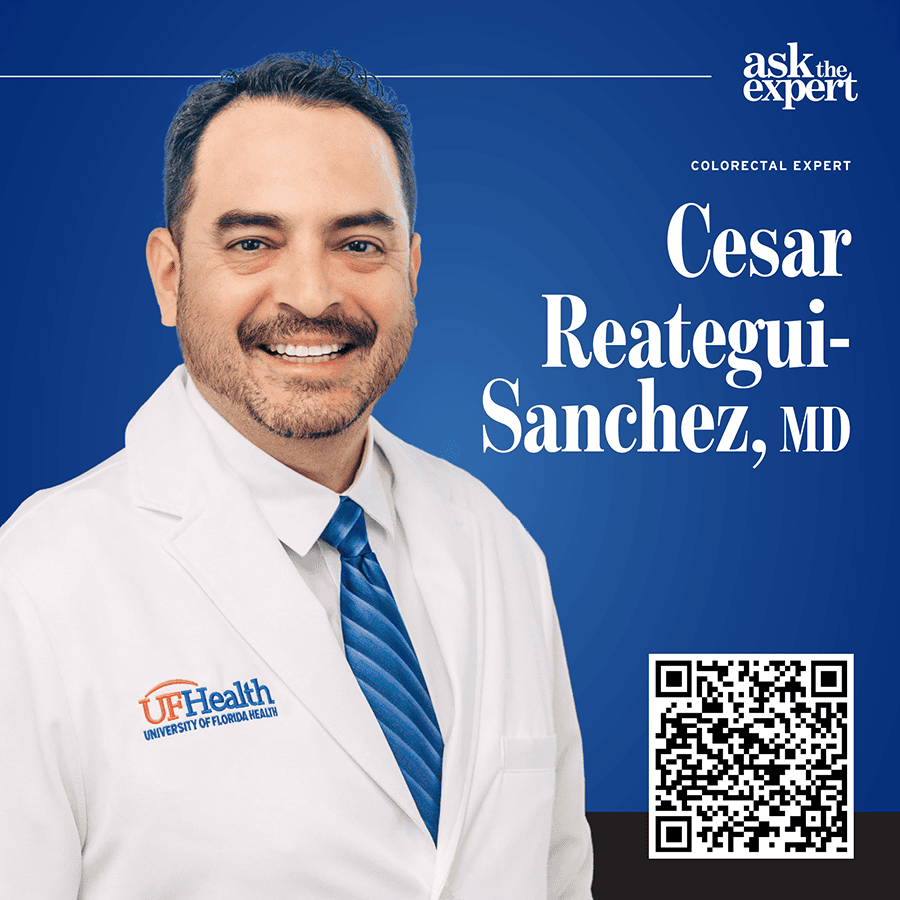
Colorectal Expert
Cesar Reategui-Sanchez, MD
Meet the Expert: Cesar Reategui-Sanchez, MD, is a board-certified colorectal surgeon who specializes in advanced GI and surgical oncology and routinely uses robotic and minimally invasive surgery to treat patients. He has contributed to the Colorectal Disease Site Working Group at the Society of Surgical Oncology. Dr. Reategui-Sanchez credits his mother, a retired physician, for inspiring his passion for medicine early in life.
Colorectal cancer is the second leading cause of cancer-related deaths in our country, so what are the recommended screening guidelines?
A: For people with no risk factors, screening is now advised to start at age 45. Ideally, someone should have a colonoscopy every 10 years. Because a colonoscopy provides an in-depth look at the entire colon, this screening tool is considered the “gold standard.” Alternatives include stool DNA testing every 3 years or flexible sigmoidoscopy performed every 5 years in combination with yearly stool occult blood testing.
Having a parent or sibling with colorectal cancer or polyps generally means you should start screening at age 40 and continue screening every 5 years.
What factors can make someone more at risk for colorectal cancer?
A: There’s not a definitive answer to what causes colorectal cancer, but we do know that certain factors can increase someone’s risk of developing colorectal cancer, including:
- Being older than 50
- Smoking
- Family history of colorectal cancer, especially in parents and/or siblings
- Having Crohn’s disease or ulcerative colitis for 8 years or longer
- History of colorectal polyps in your family or personally
- Having had breast, uterine or ovarian cancer
Since colorectal cancer is often not diagnosed until it has progressed to later stages, what symptoms should people be aware of?
A: People don’t typically have obvious symptoms in the early stages of colorectal cancer. By the time someone is experiencing abdominal pain and weight loss, the cancer is already late stage. This is why routine screenings are so important. Symptoms include:
- Change in bowel habits: constipation, diarrhea, frequency of the bowel movements
- Narrow/smaller shaped stools
- Bright red or very dark blood in the stool
- Ongoing abdominal or pelvic pain
- Bloating
- Unexplained weight loss
- Nausea or vomiting
- Fatigue, tired most of the time
Why is UF Health ranked as one of the top places to receive colon cancer surgery?
A: UF Health offers the latest in surgical care for colon and rectal disease and pelvic floor disorders. The surgical team can use minimally invasive procedures, such as transanal endoscopic microsurgery and robotic procedures for the best patient outcomes.
Ready to take the next step in your health? Visit ufhealth.org/uf-health-colorectal-services to learn more and schedule an appointment at a location near you.

Uf Health Medical Group – Colorectal Surgery
ufhealth.org/doctors/cesar-o-reategui-sanchez
UF Health Medical Group Surgical Specialists — Leesburg
705 Doctors Court, Leesburg
352.323.5025
UF Health Medical Group — Primary Care and Multispecialty
18650 US-441, Mount Dora
352.323.5665