
By Roxanne Brown
Umatilla Hemp Farm Warns Federal Restrictions Could Threaten Business








Many people assume the debate over federal hemp regulations is currently going on in Congress. But according to Umatilla hemp farmer Jammie Treadwell, that’s not exactly the case.
The law has already been approved and is scheduled to take effect Nov. 12 unless lawmakers act before then. For businesses like Treadwell Farms, the clock is ticking.
“We’re running out of time,” says Jammie, owner of Treadwell Farms. “The law is already in place. Sometimes people don’t understand that.”
The changes are intended to address concerns about intoxicating hemp-derived products that have become increasingly common in smoke shops, convenience stores and other retail locations. But Jammie says the proposal would also affect businesses like hers that operate under Florida’s existing regulatory system and produce non-intoxicating, full-spectrum CBD products.
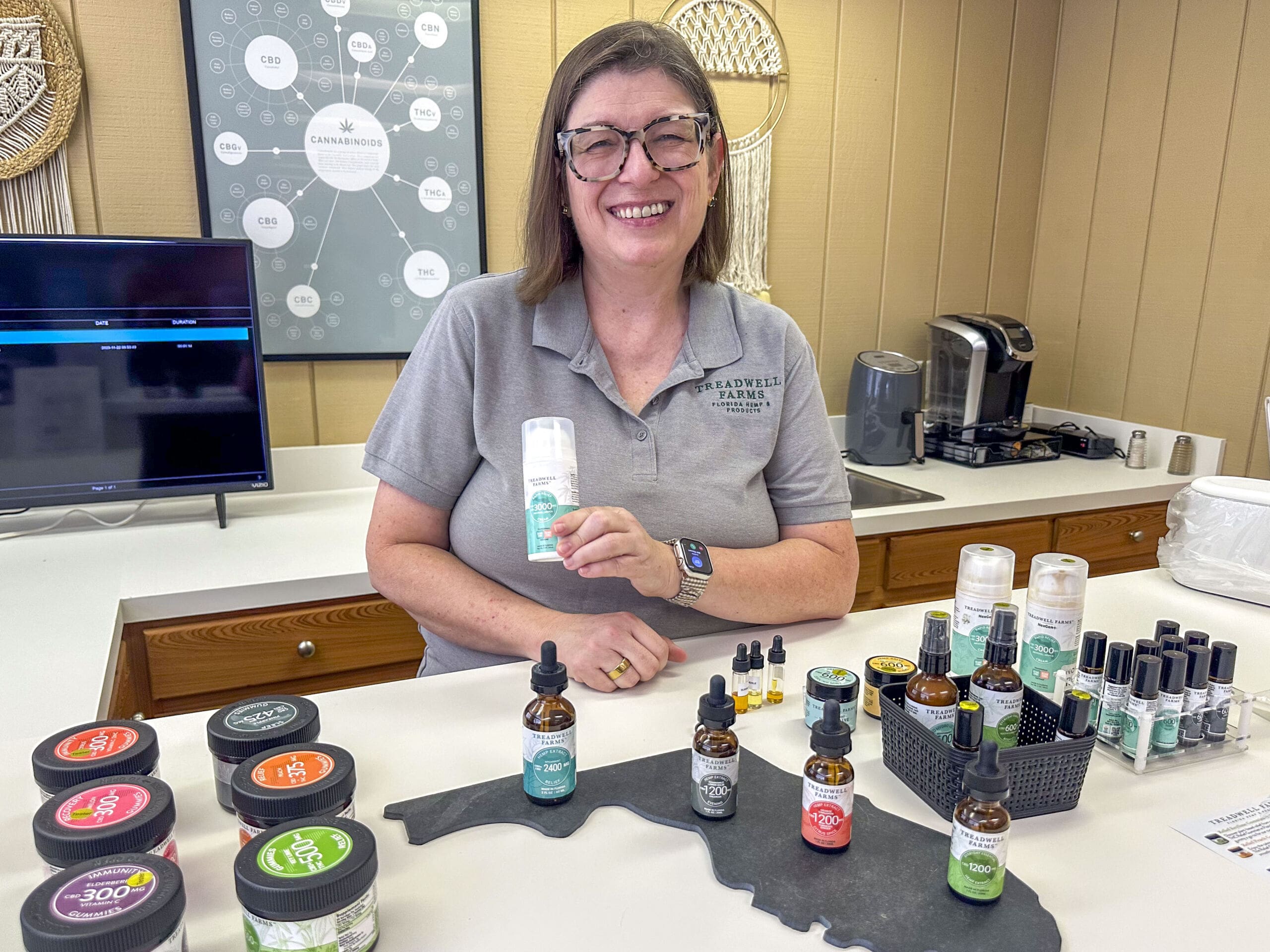
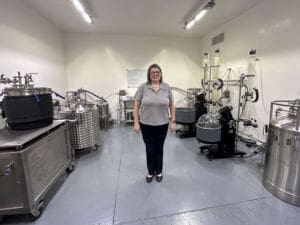
Treadwell Farms was among Florida’s first licensed hemp cultivators after the state launched its hemp program in 2020. Since then, the company has grown into a vertically integrated operation, cultivating hemp, extracting oils and manufacturing products at a former citrus processing facility in Umatilla.
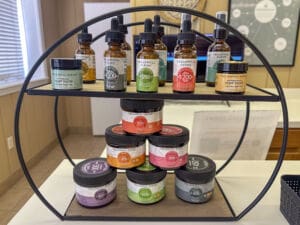
The farm produces CBD tinctures, gummies formulated with natural juices from fruit plants like elderberry, watermelon and pineapple, and topical products marketed toward customers seeking help with issues such as sleep, inflammation and pain management.
Jammie says Florida already has many of the safeguards federal lawmakers are attempting to create and Treadwell Farms has been following them 100 percent since day one. Products must be tested by certified laboratories, meet strict THC limits, be sold in child-resistant packaging and comply with age restrictions.
“I believe the federal government would be smart to look at Florida’s regulatory structure to see how this might work,” she says. “It’s actually a very good one. We’re not opposed to abiding by regulations, we just want it to be fair.”
Her biggest concern centers on a proposed cap that would limit THC content in hemp products to levels she believes are unrealistic for full-spectrum products made from naturally grown hemp.
“There is no cannabis sativa L. plant that does not have THC,” she says. “It’s like saying I’m going to grow oranges and they’re not going to have any vitamin C in them.”
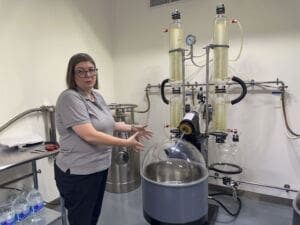
To comply, Jammie says companies like hers would have to reformulate products, redesign labels and potentially remove naturally occurring compounds they believe contribute to effectiveness.
“We would now be offering customers what we think is a less effective product, a less natural (and safe) product,” she says. “Ethically, we don’t want to lower our standards.”
For Jammie, the issue extends far beyond business.
Her family has been involved in Florida agriculture for decades. She launched Treadwell Farms to create a new agricultural opportunity in a region increasingly pressured by development.
“My family’s been in agriculture for way over a century in Florida,” she says. “This was my chance to extend our agricultural legacy in a new direction.”
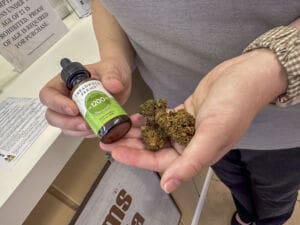
The uncertainty is already affecting the industry. Jammie says some wholesale customers have begun shutting down, while farmers who normally purchase starter plants are reducing orders because they are unsure what the future holds.
“If this goes through, I don’t know if we can survive it. I really don’t think we can,” she says.
The potential impact reaches beyond farmers and manufacturers.
For Debbie Smith, a 67-year-old Umatilla resident living with Parkinson’s disease, the issue is deeply personal.
“I was a healthy person for most of my life and then having Parkinson’s changed the quality of my life,” Debbie says. “It’s not a necessarily a death sentence, but it’s a very hard thing to have.
She says prescription medications often came with side effects that made daily life even more difficult.
“Anything (prescribed) I take for Parkinson’s has adverse effects,” she says. “But I can take CBD products without those effects.”
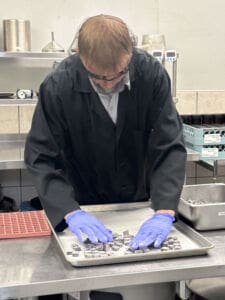
Before discovering hemp-derived CBD products, Debbie says she struggled with pain, muscle stiffness and mobility issues.
“I wasn’t even able to walk for many years,” she says. “I could barely get around. I couldn’t drive.”
Today, she relies on a cane and says the products help her maintain a level of independence she feared she had lost.
“I can think clearly, I’m not in pain and my muscles are relaxed without having to take strong pain pills or muscle relaxers that just make me sleepier and make me dizzy,” she says.
The possibility of losing access to those products worries her.
“If they take that away, I’m going to regress back to not being able to walk or drive,” she says. “I can’t even imagine that.”
For Debbie, the goal isn’t getting high. It’s holding on to as much of her former life as possible.
“People with Parkinson’s just want to be their old selves again, whatever that may be,” she says. “I can be as close to the old Debbie as I can possibly be.”
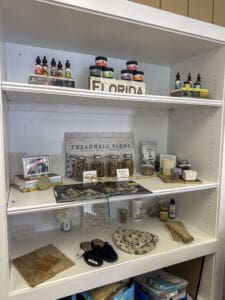
Jammie says stories like Debbie’s are what motivate her fight to preserve access to full-spectrum hemp products.
“We’re trying to do everything right,” Treadwell says. “We’re following all these rules. We don’t make any synthetic products. We don’t make any products that are above the .3 total THC limit, but we still couldn’t comply with this.”
Local businessman Matt Stewart says he has also benefited from the products.
“I don’t have to take pain medicine anymore, so I just prefer the gummies,” Stewart says. “To me, not having to deal with a hydrocodone or something like that where they’re highly addictive, that to me is a lot different.”
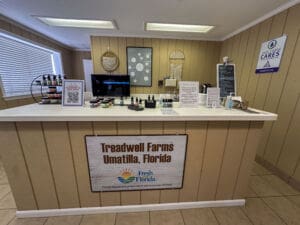
Jammie worries customers who currently buy products from regulated Florida businesses may turn to questionable sources if legal options disappear.
“I’m concerned for my customers that, once they’ve received benefit from products like ours, they’re going to seek them out and maybe they’ll buy them online or they’ll buy them from less reputable sources,” she says.
As the Nov. 12 deadline approaches, she is encouraging customers to contact federal lawmakers and urge them to revise the law before it takes effect.
For now, she says, business owners, employees and customers are all waiting for answers.
Standing inside the facility her company spent years building, Jammie admits the uncertainty has become personal.
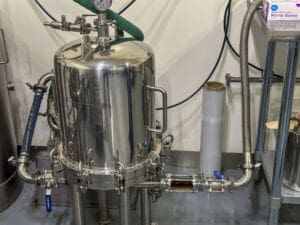
“We’re trying to do everything right,” she says. “We’re following all these rules. We don’t make any synthetic products. We don’t make any products that are above the .3 total THC limit, but we still won’t be able comply with all this and although yes, I worry about my company, my employees, I also worry about my customers.”
She pauses when talking about the future.
“We’re not the problem they’re trying to solve,” Jammie says. “We’re kind of caught in the crossfire.”
_______________________________________
What Happens Nov. 12?
Unless Congress changes the law before then, new federal hemp restrictions are scheduled to take effect Nov. 12.
According to Treadwell Farms owner Jamie Treadwell, the changes are intended to address concerns about intoxicating hemp-derived products sold in smoke shops, convenience stores and other retail outlets. However, she says the restrictions could also affect Florida businesses that produce federally legal, full-spectrum CBD products.
Why Are Hemp Businesses Concerned?
Treadwell says Florida already has some of the nation’s strictest hemp regulations, including:
• Mandatory third-party testing
• Child-resistant packaging
• Age restrictions on purchases
• THC limits and compliance testing
• Product safety standards
She believes the new federal requirements could force companies to reformulate products, redesign labels and absorb significant compliance costs.
Some businesses have already begun reducing inventory, canceling orders or delaying expansion plans while they wait to see what happens.
What Can Consumers Do?
Customers who want continued access to full-spectrum hemp-derived CBD products can contact their federal lawmakers and share their concerns before the Nov. 12 deadline.
Treadwell Farms has directed customers to an online advocacy page where they can send a message to members of Congress: https://speak4.app/lp/vj018sbu?ts=1768441917
“Our focus right now has to be getting the federal government not to make these changes,” Jammie says.
Photos by Roxanne Brown























Originally from Nogales, Arizona, Roxanne worked in the customer service industry while practicing freelance writing for years. She came on board with Akers Media in July 2020 as a full-time staff writer for Lake & Sumter Style Magazine and was promoted to Managing Editor in October 2023—her dream job come true. Prior to that and after just having moved to Florida in 1999, Roxanne had re-directed her prior career path to focus more on journalism and went on to become a reporter for The Daily Commercial/South Lake Press newspapers for 16 years. Additionally, Roxanne—now an award-winning journalist recognized by the Florida Press Club and the Florida chapter of The Society of Professional Journalism—continues working toward her secondary goal of becoming a published author of children’s books.