
By AkersMedia
Frameless vs. Semi-Frameless Shower Enclosures








sponsored content
Frameless vs. Semi-Frameless Shower Enclosures: Which One Is Right for Your Bathroom?
So you’ve decided it’s time to replace that old shower door or curtain with real glass. Good call — it’s one of the fastest ways to modernize a bathroom without a full renovation. But once you start looking, you’ll run into a question almost every homeowner in The Villages, Lady Lake, and Leesburg eventually asks: frameless or semi-frameless?
They look similar at a glance. In practice, they’re built differently, priced differently, and suited to different bathrooms. Here’s how to tell which one fits yours.
The Short Version
- Frameless = the most open, seamless look. Heavier glass, minimal hardware, higher price point.
- Semi-Frameless = most of that same clean look, with a bit of structural framing where it counts. Broader size range, friendlier price.
Neither one is “better” across the board — it depends on your shower’s shape, your budget, and how much of that fully-open look you actually want.
Glass Thickness Is the First Difference
Frameless enclosures typically use 3/8″ or 1/2″ tempered glass. Without a metal frame holding everything together, the glass itself has to do more of the structural work — so it’s thicker and heavier.
Semi-frameless enclosures generally use 1/4″ glass, with a partial frame (usually along the top, bottom, or a single vertical edge) providing the support that frameless designs get from thicker glass alone.
That difference in glass weight is part of why frameless installations tend to cost more — both in materials and in the precision required to hang heavier panels correctly.
Size and Shape Flexibility
This is where semi-frameless often has the edge. Because the frame provides structural support, semi-frameless enclosures can accommodate a wider range of shower and tub configurations — including some odd angles and non-standard dimensions that are common in older Central Florida homes.
Frameless designs work best in showers with fairly standard proportions, since the glass panels need to be large enough to stand on their own without a frame to lean on.
What About Maintenance?
Both styles use tempered safety glass, and both can be treated with a protective coating that resists water spots and soap scum. The maintenance difference comes down to the hardware: semi-frameless has slightly more metal (hinges, clips, a partial frame) that needs occasional wiping down, while frameless has less hardware overall to worry about.
Neither is high-maintenance — it’s a matter of degree.
Price and Timeline
Semi-frameless is generally the more budget-friendly option, and because it uses lighter glass and simpler hardware, it often comes with a shorter lead time from measurement to installation. Frameless enclosures, being fully custom and built from heavier glass, typically take a bit longer to fabricate and cost more — but for many homeowners, the fully open look is worth the difference.
A Few Questions to Ask Yourself
- Is your shower a standard size and shape, or an unusual layout? Standard favors frameless; unusual layouts often favor semi-frameless.
- Is minimal hardware a priority, or are you comfortable with a bit of visible framing?
- Are you working within a specific budget or timeline? Semi-frameless tends to move faster and cost less.
Getting an Accurate Answer
Photos and general guidelines only go so far — the right choice really comes down to the specific shower you’re working with. A local, in-home measurement is the only way to know for certain which option makes sense for your space, your budget, and your timeline.
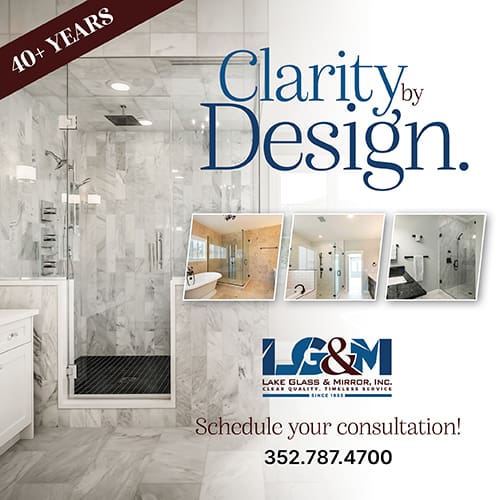
The team at Lake Glass & Mirror has been measuring and fabricating custom enclosures for Lake and Sumter County homeowners since 1983, and offers free in-home consultations to walk through exactly this decision. You can see all four enclosure styles side by side or call 352-787-4700 to schedule a measurement.