
By Akers Editorial
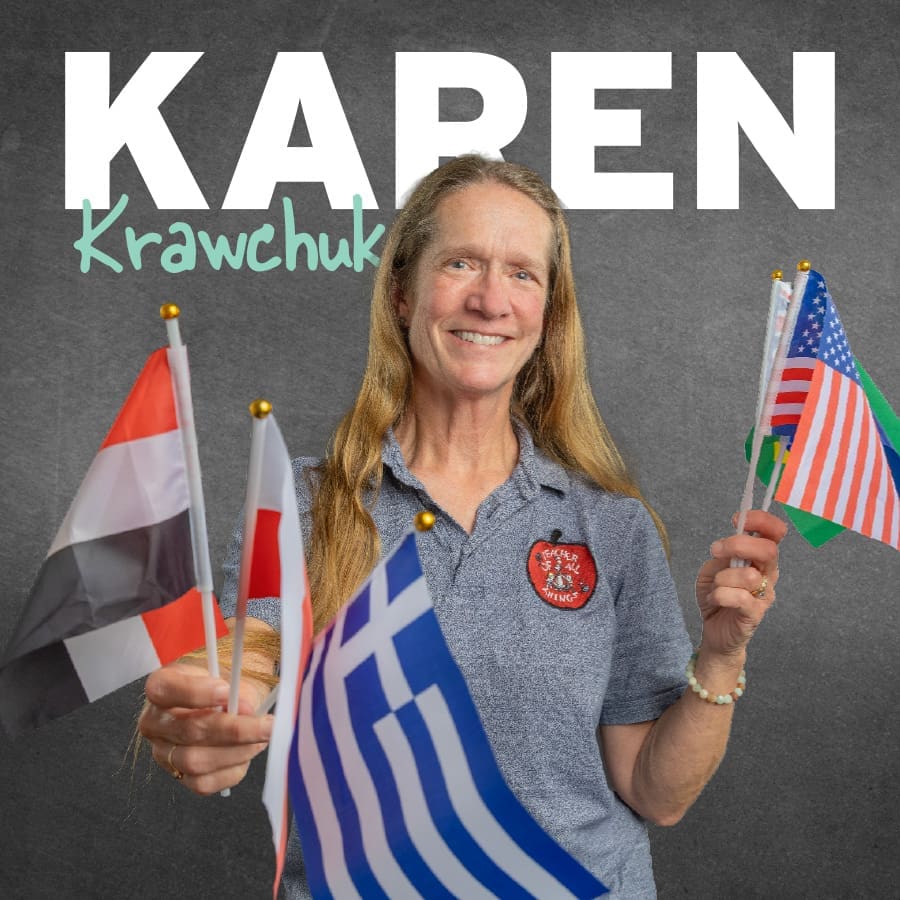
In Karen Krawchuk’s Classroom, Kindergarten Goes Around the World








Kindergarten | Minneola Charter School
Karen Krawchuk did not set out with some lifelong dream of becoming a teacher.
In fact, she says her path into education happened in a much more ordinary way.
“I picked elementary education,” she says, recalling how she chose the major while attending college close to home in New Jersey after deciding a different path—physical therapy—was not for her. That, and she wasn’t ready to leave the love of her life, Adam Krawchuk, who she’s still married to and supports her efforts every step of the way, even if it means him helping her with pulling off her school projects to this day.
So, to make a long story short, what began as a practical decision turned into a career she has now spent nearly three decades building and transforming, and all for the benefit of young learners.
Karen has taught kindergarten for 28 years, beginning in Florida in 1998. After a short time at Lost Lake, she returned to Minneola Charter School in 2004 and has been there ever since. Over the years, she has developed a teaching style that is anything but ordinary. She sees her classroom as a place where curiosity takes root and learning comes alive.
“About 5 years ago, I started researching project-based learning after realizing that if I don’t make teaching fun; like letting myself be truly excited about teaching, learning is not going to be fun for my students,” she says.
That mindset helped shape the creative, project-based classroom she is now known for. She first developed the countries-and-continents, hands-on learning approach on her own. Now, fellow kindergarten teacher Margaret Karnes, whose classroom is next door, works alongside her. The two coordinate and plan the themed lessons together.
“Although I started the project-based learning solo, Ms. Karnes showed interest and dedication, and we have had much success,” Karen says. “After all, two brains are better than one. It is nice to have someone to bounce ideas off of and share the smiles, frustrations and future lessons with.”
“And yes, we’re academic. We teach them what we need to, but then we give them this extra little piece they can gasp onto.”
Using themes that connect reading, writing, science and social studies, the two teachers turn lessons into immersive experiences students can see, touch, taste and retain.
“The more senses we use, the more we remember,” Karen says.
This year, for example, the class has been exploring different continents month by month. While learning about the Philippines, students made colorful jeepneys, studied water buffalo, created rice terrace art and sampled Filipino food. In other lessons, they have built Stonehenge from Rice Krispies treats, decorated berets while learning about Europe and even went bowling after discovering the game is believed to have originated in ancient Egypt.
For Karen, the extra planning is worth it because she sees the effect it has on children.
“They have a love of learning, and I think that’s the biggest thing.”
That excitement does not stay solely in the classroom. Students go home talking about what they learned, parents send photos and former students come back remembering which penguin they were assigned in her class years earlier. One parent even told her how while riding the Small World ride at Disneyworld, they could barely get their son to stay seated when he recognized the Taj Mahal.
Karen says one of the joys of teaching kindergarten is watching just how much children grow in such a short time.
“They come in happy to be at school and they learn so much in 180 days. It’s incredible.”
She believes children do their best when they know their teacher cares and when school feels like a place filled with joy, curiosity and discovery.
For Karen, that simple idea has shaped not only her classroom, but the lasting memories her students carry with them long after kindergarten ends.
“I always say, if the kids are happy, they’re learning and engaged,” she says. “It’s a lot of work, but just to see how the children progress and witness their excitement about learning and seeing the kids come in with smiles on their faces is so worth it because if they’re not excited, they’re not going to do their best”
“When they want to be at school, that’s the most important thing.”